Introduction
In today’s hyper-connected world, customer experience is the key differentiator for businesses. Businesses using traditional call logs often respond too late. This leads to missed chances to boost customer satisfaction. Let’s explore how this powerful technology is redefining data-driven customer service.
Understanding Real-Time Call Insights
What Are Real-Time Call Insights?
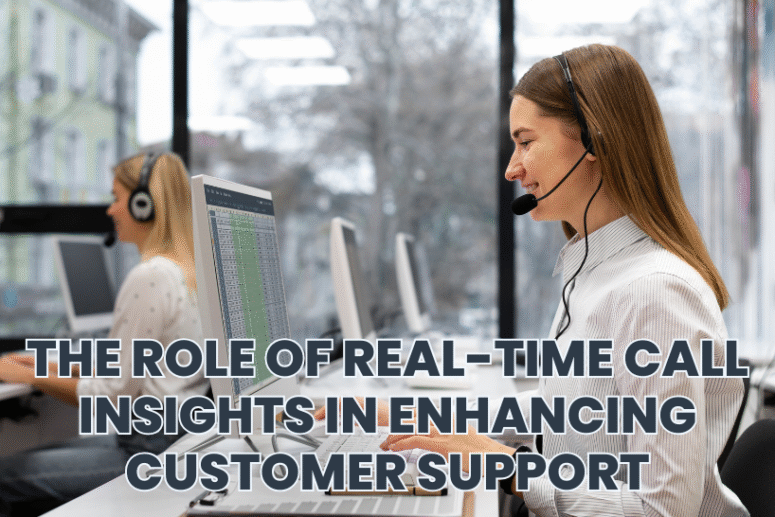
They use call analytics software. This tracks data and shows it on a real-time dashboard. Teams can then make quick, informed decisions.
Example:
Imagine a customer calling about a billing issue. Live call monitoring tools help managers see if an agent is stressed or if a customer is upset. Intervention can happen in real time — improving resolution rates and customer satisfaction.
Why Real-Time Call Insights Matter
1. Faster Issue Resolution
Supervisors can use real-time communication analysis to spot problems during calls. This includes issues like long hold times, repeated transfers, or negative feelings. They can then provide quick support.
Tip: Use real-time call reporting systems. They can send alerts if calls go over a set time or if customers ask to escalate.
2. Data-Driven Customer Support
Gone are the days when intuition alone guided support decisions. With call data insights for customer support, businesses can analyze trends like:
- Average call handling time
- Common customer complaints
- Peak calling hours
- Agent performance metrics
This helps managers improve staffing and cut wait times. It also boosts first-call resolution rates. These are all important for data-driven customer service.
3. Improved Agent Performance
Supervisors can use real-time customer support insights to watch ongoing calls. This lets them give live feedback or coaching. If an agent forgets protocol while greeting a customer, a supervisor can step in. They can use chat or whisper coaching tools to guide the agent. This helps keep service quality high without interrupting the call.
4. Enhanced Customer Experience
When customers feel heard, understood, and prioritized, satisfaction naturally increases. Businesses can use real-time call analytics to spot patterns. This includes customer sentiment, tone changes, and recurring frustrations.
Benefits of Real-Time Call Tracking:
- Personalized responses based on live feedback
- Reduced call abandonment rates
- Faster escalation handling
- More empathetic conversations
This leads to stronger relationships and enhanced customer experience through call insights.
5. Proactive Decision-Making
Real-time visibility allows managers to act — not react. This helps them escalate the issue across the company before it gets worse.
Pro Tip: Connect your real-time call reporting system with CRM tools. This helps you find repeated problems and important customers who need more care.
6. Better Team Collaboration
Sales and support teams can quickly share important information with call management insights. This promotes transparency. It ensures everyone can access current communication data. As a result, customer engagement strategies become unified.
How Businesses Use Real-Time Call Insights
Many industries are embracing real-time call analytics to refine their operations:
- E-commerce: Track customer satisfaction and identify abandoned order calls.
- Healthcare: Monitor tone and response times in patient communication.
- Finance: Ensure compliance and maintain secure, high-quality support.
- Telecom: Optimize call performance metrics and agent workflows.
Combining customer service analytics tools with AI and speech recognition helps businesses. They get actionable insights, like keyword tracking and emotion detection. This boosts long-term customer loyalty.
Key Metrics Tracked in Real-Time Call Analytics
- Average Handling Time (AHT) – Measures call efficiency.
- First Call Resolution (FCR) – Tracks how many issues are resolved on first contact.
- Customer Sentiment Score – Analyzes tone and satisfaction.
- Hold Time & Abandonment Rate – Identifies service bottlenecks.
- Agent Talk-to-Listen Ratio – Ensures balanced communication.
Tracking call performance metrics helps businesses see how well they communicate. It also shows where they can improve.
Conclusion
Real-time call insights are revolutionizing how businesses manage customer communication. Companies can shift from reactive to proactive customer support. They can do this by using call analytics software and live monitoring tools. This change leads to faster resolutions, happier clients, and empowered agents.
At Flexitelco, we help businesses improve their communication. Our smart call management and analytics solutions make this possible. Our real-time systems help you make quick, smart decisions. This improves customer experience and boosts performance. Ready to take your customer support to the next level? Contact Flexitelco today. Learn how real-time call insights can change your business communication.
FAQs
Q1: What are real-time call insights?
Real-time call insights are live analytics that track customer interactions as they happen. They offer instant data on call performance, sentiment, and customer satisfaction. This helps teams make quick and informed decisions.
Q2: How do real-time call insights improve customer support?
Supervisors can monitor calls, guide agents in real time, and spot recurring issues right away. This ensures faster resolutions and a smoother customer experience.
Q3: What tools are used to gather real-time call insights?
Common tools are:
- Live call monitoring software
- AI-powered analytics platforms
- CRM-integrated call dashboards
These tools capture key metrics, such as response times and sentiment.
Q4: Can real-time call insights help train customer support agents?
Yes. Real-time analytics help identify agent strengths and weaknesses during calls. Managers can provide instant coaching, improving skills and consistency in customer communication.
Q5: What are the key metrics tracked in real-time call analytics?
Metrics include call duration, wait time, customer sentiment, first-call resolution, and agent performance. These are key to assessing and enhancing support quality.
outsourced call centre